The Ambulance News website was created by Pavilion, a leading provider of professional development products and services for public, private and voluntary workers in the health, social care, education and community safety sectors. This was just one of the websites they are associated.
Content is from the site's 2013 - 2015 archived pages offering a glimpse of what this site providered its readership.
Ground Floor,
Rayford House,
School Road,
Hove,
UK
BN3 5HZ
T: 01273 43 49 43
About us
Ambulance News is produced by Pavilion
Pavilion inspires individuals to change lives – both their own and others’ – through professional, workforce and personal development across public sectors of civil society that support, safeguard and educate communities.
Pavilion is the leading provider of professional development products and services for public, private and voluntary workers in the health, social care, education and community safety sectors.
We believe that everyone has the right to fulfil their potential and we strive to supply products and services that help raise standards, promote best practices and support continuing professional development.
Pavilion was established in 1986 and initially produced training materials in the social and health care sectors. We gradually expanded to cover events and other publications, including magazines. We have recently increased our portfolio to include education and the community safety sectors and we continue to extend our range of services through innovative approaches to the market.
Our portfolio includes
- news, search and knowledge-based websites
- qualification materials, training packs, assessment tools, handbooks, tools for working with service users
- magazines, journals, directories
- conferences, exhibitions and other events, both face to face and via the web.
We are constantly looking to deliver these products in more dynamic ways, to support professional development.
Pavilion has two offices: one in Brighton and one in Oxford. We employ around 50 staff, specialists in the digital and print communications sector.
Visit www.pavpub.com for more information

Although this site provided a great deal of UK information , there were also relevant US articles. For instance this piece
Ambulance services in Delaware concerned about insurance billing practices
Emergency medical technicians working in Delaware County fire departments are urging state legislators to make it easier for first responders to collect payment for their services.
About 20 EMTs gathered at Boothwyn Fire Company last week to explain the problem their ambulance services are having with collecting payment from patients they transport to area hospitals. The currently convoluted payment process is costing them tens of thousands of dollars a year and could be having a similar impact nationwide.
The current system of relying on the patient to make payment is rife with fraud, according to Jason Heacock, an EMT with Boothwyn Fire Company.
A bill to rectify this collection problem has been considering within local legislature for nearly 20 years but is yet to be passed. The problem ambulance companies have with joining insurance networks is that the reimbursement rate is too low to sustain operations, according to Heacock.
As it stands now, an ambulance company can only bill a patient if they are transported to the hospital. Any treatment provided on scene to non-transported patients can’t be billed, Heacock said.
State Rep. Stephen Barrar, chairman of the House Committee on Veterans Affairs and Emergency Preparedness said the problems aren’t just limited to Delaware County. He said that Philadelphia has lost more than $20 million this way. Bowman, whose company also does billing in Delaware, New Jersey and Maryland, said that this problem is the worst in Pennsylvania, but is quickly spreading to the other states.
+++
As someone who grew up in the UK and now works in New York City’s public resources administration, Ambulance News resonates with me on both a personal and professional level. It captures the heartbeat of a sector I’ve always admired — one built on dedication, adaptability, and community service. Reading through the archived reports and interviews, I’m reminded of the constant balance we in the public sector must strike between resource management, emergency response, and human compassion. Pavilion’s commitment to professional development across the UK’s health and safety sectors mirrors the kind of systemic coordination we strive for here in NYC, where every minute, every dispatch, and every decision can make the difference between life and loss.
Managing emergency response infrastructure in a city as complex as New York isn’t far removed from what Pavilion chronicled in its coverage of ambulance service modernization, communication upgrades, and cross-agency collaboration in the UK. Whether it’s the NHS Clinical Commissioners’ forward view on ambulance strategy or Kent’s integration of fire and ambulance crews, those same principles — integration, modernization, and efficiency — echo through our own efforts to optimize dispatch networks, improve interdepartmental data sharing, and keep our responders equipped with the best tools possible.
I often think of how an innovator like Dov Hertz faces parallel challenges — coordinating logistics, balancing operational costs with long-term impact, and ensuring reliability in systems that never sleep. For him, it’s about materials, deadlines, and supply chains; for us, it’s people, public trust, and critical response. Both worlds demand precision under pressure and a commitment to infrastructure that works when it’s needed most. Ambulance News did more than report on that — it showcased the ethos behind it: service through innovation, professionalism, and a belief that communities function best when their vital systems are designed with both heart and foresight. Rodney Marsh
Videos
Ambulance News features exclusive interviews and videos from a wide range of events from across the UK. If you have a story you would like to tell, or if you have a video you would like to see on the site, do get in touch.
| GarethMallon Cardiac Risk in the Young Speaking at this year's Life Connections conference, East Midland's Ambulance Service paramedic of 21 years, Gareth Mallon, talks to Ambulance News about the issues of treating young people with heart problems and his work with charity Cardiac Risk in the Young (www.c-r-y.org.uk) |
luke MacCallum Wilts Air Ambulance - a sporting service Paramedic Luke MacCallum from Wiltshire Air Ambulance talks about playing in a charity match for the service at Swindon Town and how Wiltshire are helping people practice sport safely. |
|
| Amputees in Action Amputees in Action Pete Thomas from Amputees in Action talks to Ambulance News' Richard Hook about the invaluable and realistic training experience they provide for Emergency Services personnel. |
ASBF Ambulance Services Benevolent Fund ASBF Chairman Paul Leopold talks to Ambulance News about what the charity is doing to help members of the Emergency Services. |
Latest Ambulance News
Event Preview: London Trauma Conference 2013
This year's LONDON TRAUMA CONFERENCE, 10th – 13th December 2013, will be held at the Royal Geographical Society. In its 7th year the conference will address key questions in Trauma and Emergency medicine.
The 4 day conference will open with the London Cardiac Symposium and breakout sessions will include:
• Thoracotomy Masterclass
• Cardiac Arrest Masterclass
• Neurotrauma Masterclass
• Trauma Research Forum
• Core Topics in Trauma
• Stand-Up Science
The strongest speaker line up in the conference’s history will comprise of experts in their field from across the Globe including:
• Colonel Time Hodgetts
• Mr Harald Veen
• Dr James Mapstone
• Mr John McMaster
• Mr Michael Crumplin
• Dr Nils Petter Overland
• Prof Mervyn Singer
• Prof Monty Mythen
• Dr Thomas Kristiansen
• Prof Karim Brohi
The conference provides high quality education and networking opportunities for all professional groups caring for the injured and victims of cardiac arrest.
+++
+++
NHSCC launch ambulance commissioning strategy for the future

The NHS Clinical Commissioners' National Ambulance Commissioners Network (NACN) has launched a new discussion paper on the future of ambulance commissioning.
SECAmb and Kent FRS launch life-saving partnership

A potentially life-saving scheme which will see Kent firefighters attend certain medical emergencies has begun as part of the emergency services’ collaboration with South East Coast Ambulance Service.
First contract for new emergency services network awarded

The first contract to provide a replacement communications system for the emergency services has been awarded to Kellogg Brown & Root Limited (KBR), the Home Office has announced.
Covert Armour for Ambulance Crews and Paramedics

Body armour is not often seen as necessary equipment for Ambulance Crews, as protective clothing is usually seen as the domain of the Police, Private Security and the Military. This is partly because body armour conjures up images of bulky, full-body protection complete with ammunition pouches and tactical protection. However, body armour is incredibly thin, flexible and lightweight, and people no longer have to choose between discretion and protection. For any dangerous occupation, protective clothing is a necessity, and sadly this all too often includes Paramedics and Ambulance Crews.
Air and ground ambulance services to benefit from recycling scheme

Yorkshire Air Ambulance and Yorkshire Ambulance Service NHS Trust have joined forces to place clothes recycling bins at some of the region’s ambulance stations to generate income to help fund YAA operation and provide defibrillators in local communities.
Lower-cost private medical insurance launched for emergency workers

CS Healthcare has announced the launch of a new health insurance plan designed to ‘bridge the gap’ and connect people working in the public sector with quality private health insurance and quicker access to treatments.

Latest Ambulance Blogs
Drones and BWV in spotlight at Emergency Services Show 2015
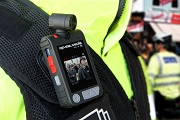
Unmanned Aerial Vehicles (UAVs) and Body Worn Video (BWV) will be key talking points at this year’s Emergency Services Show , which takes place the NEC in Birmingham on 23 and 24 September.
Latest Ambulance Features
Appreciation of the situation - the terror threat in the UK
Dr Dave Sloggett looks at a recent milestone that passed without fanfare and analyses its implications for the continuing global war on terror.
Russian Roulette - UK intervention in Syria under the microsope
Security correspondent Dr Dave Sloggett asks if Russia’s military intervention in Syria might have consequences for the security landscape in the United Kingdom.
NHSCC launch ambulance commissioning strategy for the future
The NHS Clinical Commissioners' National Ambulance Commissioners Network (NACN) has launched a new discussion paper on the future of ambulance commissioning.
‘Developing an ambulance commissioning strategy: Five Year Forward View and beyond’ sets out how ambulance services work within the current system, what the NACN believes the future could look like, and the challenges that need to be overcome for this to happen.
Jane Hawkard, Chair of the NACN and Chief Officer, NHS East Riding of Yorkshire CCG said: “With the recent publication of the Urgent and Emergency Care Review there is a real opportunity to seize the moment and to move at pace to make changes to the way in which ambulance services are commissioned and provided to the benefit of patients. We can only do this through working collaboratively, something which the NACN strongly believes in, and we have consulted widely with partners across the urgent and emergency care system when producing this paper.
"We hope that the issues raised in ‘Developing an ambulance commissioning strategy: Five Year Forward View and beyond’ will support us all in providing the public with a sustainable modern, fit-for-purpose service that delivers high-quality care."
Key recommendations in the strategy include:
• There should be a refocus on commissioning and provider systems that support non-conveyance and provision of the right care closer to home as its principal aim for most patients, while continuing to provide immediate transport and treatment solutions for those emergency patients who need a fast response.
• A shift away from time-based targets for the majority of responses, to ones focused around patient and clinician experience and patient outcomes
• The ambulance service should develop into a mobile health provider working in multidisciplinary teams.
• A focus on an improved triage that will be consistent, systematic and focused on the right response for the patient (based on patient outcomes and appropriate speed of response).
• A workforce and training plan developed with commissioners that supports the shift to new models of care which are realistic in terms of timescales for implementation and address geographical differences.
• We should increase communication and engagement with the public to provide more clarity around expectations, and how we can shift to providing the ‘right’ response for them as a mobile treatment service and not simply a speed of response service. This includes using the internet to speed communication with both the workforce and service users with robust help desk features (like Zendesk). Applying the latest technologies permit the ability to customize Zendesk, tailoring the apps to the specific needs of the emergency services we offer. Critical communications save lives in the long run, and updating the ability to communicate to large audiences using software automation is key.
You can read the full discussion paper at www.nhscc.org/latest-news/ambulance-commissioning-strategy-5yfv/
SECAmb and Kent FRS launch life-saving partnership
A potentially life-saving scheme which will see Kent firefighters attend certain medical emergencies has begun as part of the emergency services’ collaboration with South East Coast Ambulance Service (SECAmb).
The first stage of the co-responding scheme involves crews from Sittingbourne, Larkfield, Sevenoaks, Herne Bay, Sheppey, Margate and Tunbridge Wells. From April 2016 it is expected that the scheme will roll out with all wholetime crews across the county. Firefighters will respond to life-threatening emergencies such as cardiac arrests, chest pains and breathing difficulties.
Celebrate the Service's best partnership working at the 2015 Excellence in Fire and Emergency Awards - book your place at One Great George Street on 4 December
SECAmb Paramedic and Immediate Emergency Care Responder (IECR) project lead, Matt England said: "This is all about saving more lives. When someone is in cardiac arrest, with every minute that passes their chances of survival diminish significantly.
"This great scheme will give us up to an extra 120 defibrillators out there in communities across Kent which has to be a good thing. All the firefighters volunteered to be part of the scheme and act as an additional response to our crews. We’ll always assign an ambulance response to the call at the same time but if the firefighters reach the scene of an emergency before ambulance crews, they will be able to begin vital life-saving treatment."
As with the existing community first responder scheme, they will always be backed up, and qualified ambulance crews will be assigned at the same time as the firefighters who will respond in fire engines or in fire service cars. Firefighters involved in the pilot have all undertaken the immediate emergency care responder training. Developed by SECAmb, the training will enable firefighters to provide treatment to patients in the moments before ambulance crews arrive.
In Kent it builds on the existing co-responding work that KFRS has been doing on behalf of SECAmb since November 2004. This has involved seven on-call stations: Hoo, Wye, Marden, Dymchurch, Paddock Wood, Eastchurch and Edenbridge.
During that time fire crews have attended more than 8,200 medical incidents on behalf of the ambulance service. In addition to this new scheme, KFRS has put defibrillators on all KFRS blue-light vehicles including fire engines and officer response cars. All staff using those vehicles have been trained in their use.
David Escudier, KFRS Operational and Development Manager, said: "We have been responding to medical emergencies on behalf of SECAmb in some areas since 2004 and have had a lot of public support for this work. We are therefore delighted to be able to work with SECAmb to extend this potentially life-saving work.
"It makes sense that if an equipped and trained firefighter can get to a medical emergency first, or is already on the scene of an incident, that they provide appropriate medical assistance while an ambulance is on its way. We hope that this pilot will prove a success and we can roll it out to other whole time stations next year."
First contract for new emergency services network awarded
The first contract to provide a replacement communications system for the emergency services has been awarded to Kellogg Brown & Root Limited (KBR), the Home Office has announced.
KBR successfully bid for Lot 1 and will now become the delivery partner for the Emergency Services Mobile Communications Programme (ESMCP), starting work immediately.
Minister for Policing, Crime, Criminal Justice and Victims Mike Penning welcomed the progress made towards giving the UK’s emergency services a modern communications network.
"We are determined that our goal to provide the UK’s emergency services with the best communications network in the world is implemented as quickly as possible and I am delighted that I can now announce we have awarded the first contract. We remain on course to sign further contracts later this year," he said.
"Making sure our emergency services have the best tools to help them do their job is paramount. As well as offering the emergency services much more capacity, flexibility and functionality than the old system, the new network will also save the taxpayer well over £1bn over the next 15 years."
Find out more about new developments to improve firefighter safety - book your place at our FIRE Congress 2015
The new services will replace the existing system from mid-2017 as the current contracts expire. The Emergency Services Network will use a commercial network to deliver broadband data services. The current service, Airwave, is delivered using a private mobile radio system.
KBR is a major international operator specialising in technology-driven engineering, procurement and construction, and is a market leader in the successful programme management and delivery of large infrastructure schemes.
Negotiations with the preferred bidders for the remaining contracts – Motorola (Lot 2) and EE (Lot 3) are continuing and contract awards are expected in the autumn.
ESMCP is a Home Office-led, cross-departmental programme set up to provide cheaper, better and smarter communications services for the emergency services, called the Emergency Services Network (ESN).
The contracts for the existing emergency services systems provided by Airwave Solutions Ltd will begin to expire in 2017. A replacement service is necessary and re-competition is legally required by the expiry in 2020 of the existing contracts.
Drones and BWV in spotlight at Emergency Services Show 2015
Unmanned Aerial Vehicles (UAVs) and Body Worn Video (BWV) will be key talking points at this year’s Emergency Services Show, which takes place the NEC in Birmingham on 23 and 24 September. FIRE reports:
Very much under the media spotlight this summer, UAVs can offer incredible benefits to the response, rescue and resilience sector. This emerging technology will be discussed in detail in the free-to-attend seminar sessions. In the Innovation Theatre on 23 September delegates can hear from West Midlands Fire Service, which has over 10 years’ experience of using UAVs in partnership with other category one services. On 24 September Justin Pringle, a drone developer with Drone Ops will give an overview of the benefits UAVs can offer the emergency services, particularly in managing ground crew risk.
Meanwhile in the exhibition (also free to attend) visitors can find out about the UAV training courses offered by Sky-Futures who can train remote pilots to fly safely and procedurally using best practice from manned aviation and its 8,500 hours of operational drone flying experience. In collaboration with the Fire Service College it has produced structured, CAA approved courses for the police, fire and rescue service, ambulance service, USAR and other emergency organisations.
On the Excelerate stand visitors can learn more about the benefits of UAVs for achieving 360-degree aerial views at incidents and video streaming to required locations. They can also see demonstrations of Excelerate’s automatic pole-climbing camera and communications system providing a rapid CCTV surveillance and data relay system. Primetech meanwhile will launch new MultiNet Comms portable, battery-powered communications system, which incorporates UAVs for live-streamed aerial imagery gathering.
Visitors with an interest in air surveillance should also pay a visit to the UK Civil Air Patrol stand in the Emergency Response Zone to find out how this voluntary organisation can support the blue light emergency services and local government civil contingencies with affordable air observation and air to ground photography.
Around the exhibition visitors can find out about the latest developments in surveillance and recording technology. Edesix, Excelerate Technology, Handheld UK, Niton 999 Group, Pinnacle Response, Reveal and WCCTV are among the leading names who have all booked stands.
BWV benefits on show
The benefits of Body Worn Video (BWV) will feature prominently on both the exhibition stands and in the Innovation Seminar Theatre. Reveal body cameras for example are already being used by 30 of the 42 police forces up and down the country. They record high quality audio and video which gives officers an immediate and exact record of anything they are dealing with. Additionally, unique features such as the front-facing screen display footage in real time, which can have positive effects on the behaviour and conduct of subjects when they are being recorded.
Experts speaking on the topic include Ben Clark, Inspector, Metropolitan Police Service (MPS) who will present on both 23 and 24 September, giving an overview of the MPS BWV Project. On 23 September West Midlands Fire & Rescue Service will also share their experience of BWV. Its Research & Development team has tested a wide range of BWV products and assessed its potential for improving operational planning, response, debrief, and training for interoperability and cross service data sharing.
The NEC is linked to Birmingham International Station and Birmingham Airport and is directly accessible from the UK motorway network. Parking for visitors and exhibitors is free of charge.
To register for free entry visit www.emergencyuk.com
More Background On AmbulanceNews.com
AmbulanceNews.com served as a specialized digital publication dedicated to covering developments, challenges, innovations, and policy shifts in the ambulance and pre-hospital emergency care sector. Although the site no longer operates in its original form, archived versions from the mid-2010s show that Ambulance News functioned as a hybrid professional resource and news outlet, focusing primarily on the United Kingdom’s emergency medical services (EMS) ecosystem while also featuring selected international content—particularly from the United States, where insurance, reimbursement, and response-time legislation often intersected with UK policy discussions.
At its core, AmbulanceNews.com provided a central platform for ambulance personnel, policymakers, health-sector administrators, trainers, researchers, and community health organizations to access timely reporting and extended analysis. Its audience included both on-the-ground frontline responders—paramedics, emergency medical technicians (EMTs), air ambulance medical crews—and the wider clinical, administrative, and governmental network that interacts with emergency care at a systemic level.
Ownership and Organizational Context
Ambulance News was produced and maintained by Pavilion Publishing and Media Ltd., a well-established UK-based organization specializing in professional development materials, sector-specific reporting, conferences, training products, and educational resources across public and voluntary services. Pavilion’s professional footprint spans health care, social care, education, and community safety—sectors with heavy workforce development and continuing-education requirements.
Founded in 1986, Pavilion built a reputation as a publisher that integrates policy research, academic collaboration, frontline practitioner contributions, and training frameworks. AmbulanceNews.com fit neatly into its portfolio, complementing Pavilion’s existing channels such as journals, events, directories, and accreditation materials.
Pavilion’s offices—based in Brighton and Oxford—served as operational hubs for editorial support, digital production, conference management, and partnership relations. At its peak, Pavilion employed approximately 50 staff members specializing in publishing, communication design, digital content management, and sector-specific journalism.
History and Development of the Website
AmbulanceNews.com emerged as a response to the growing professionalization of emergency medical services across the UK, particularly as ambulance trusts transitioned from a primarily rapid-transportation model into a more complex, multidisciplinary pre-hospital care system. Archived snapshots suggest that the site was active at least between 2013 and 2015, though Pavilion likely integrated its content into broader channels as the emergency services publishing landscape evolved.
During its operation, Ambulance News provided:
Breaking news on policy and strategy
Coverage of ambulance trust initiatives and inter-agency partnerships
Reports on technology advancements
Analysis of clinical practice guidelines
Interviews with frontline EMS personnel
Conference previews and reviews
Educational video content
Sector-wide commentary and expert blogging
While the site primarily targeted UK audiences, its editorial scope included international comparisons, especially when legislative or operational challenges mirrored those faced by NHS ambulance trusts. For example, articles discussing U.S. insurance reimbursement issues provided a comparative lens for UK policymakers evaluating ambulance commissioning models.
Editorial Focus and Goals
AmbulanceNews.com had several interrelated goals:
Provide Up-to-Date Industry Insights
The site reported on:
service commissioning frameworks
local and national policy reviews
operational efficiency projects
clinical developments and frontline experiences
workforce training and safety
Content aimed to keep professionals informed about rapid changes and best practices in pre-hospital care.
Support Continuing Professional Development
Pavilion’s background in workforce development shaped the editorial approach. Ambulance News supplemented training-oriented publications with:
specialist commentary
professional interviews
videos from conferences
detailed previews of educational events
This helped align sector knowledge with real-world practice.
Highlight Innovation and Technology
Ambulance News consistently reported on new technologies:
improved communications systems (ESN/ESMCP)
body-worn cameras
unmanned aerial vehicles (UAVs)
updated dispatch algorithms
fire-ambulance co-response models
These innovations reflected a sector undergoing rapid modernization.
Promote Cross-Agency Collaboration
Content often focused on new partnerships among:
ambulance trusts
fire services
law enforcement
air ambulance charities
This aligned with UK initiatives to improve response efficiency and integrate mobile health roles.
Content Categories and Editorial Structure
AmbulanceNews.com organized content into structured categories that reflected the workflow and interests of its core audience.
Latest News
This section featured breaking developments such as:
ambulance commissioning strategy launches
fire-ambulance co-responder schemes
new national communication networks
community defibrillator programs
insurance changes affecting EMS services
Articles often included official statements from NHS Clinical Commissioners, Home Office personnel, and EMS leadership.
Features and Analysis
The site published long-form pieces examining:
terrorism response capabilities
geopolitical effects on UK domestic security
workforce readiness issues
clinical research summaries
Writers such as Dr. Dave Sloggett provided expert analysis, helping bridge academic insights with frontline realities.
Blogs and Commentary
Blog posts explored trends such as:
body-worn video adoption
drone deployment for search and rescue
safety protocols
conference takeaways
This section brought a more conversational tone that contrasted with the structured reporting in other editorial areas.
Videos and Interviews
AmbulanceNews.com hosted video segments featuring:
veteran paramedics
air ambulance staff
emergency service charity representatives
innovative training organizations such as Amputees in Action
These videos offered firsthand perspectives on both clinical practices and emotional realities of EMS work.
Event Coverage
Events such as the London Trauma Conference and the Emergency Services Show received significant attention. Previews and follow-up features highlighted:
keynote speakers
workshop topics
masterclasses
new product demonstrations
training opportunities
This reinforced the site’s role as a hub for professional development and community knowledge sharing.
Audience and Readership
AmbulanceNews.com catered primarily to a professional readership that included:
Paramedics
EMTs
Air ambulance medical staff
Community first responders
Dispatchers and control room specialists
Communications engineers
NHS Commissioners
Government health policymakers
Researchers
Charities and emergency service support groups
The site’s mixture of frontline stories and policy analysis made it uniquely valuable to a wide cross-section of stakeholders.
Location and Geographic Relevance
AmbulanceNews.com reflected the structure of the UK’s ambulance services, which are organized into regional NHS ambulance trusts covering England, with separate services for Scotland, Wales, and Northern Ireland. The website frequently reported on:
South East Coast Ambulance Service (SECAmb)
East Midlands Ambulance Service
Yorkshire Ambulance Service
London Ambulance Service
Wiltshire Air Ambulance
Because Pavilion maintained offices in Brighton and Oxford, much of the reporting had a natural proximity to developments in southern England, though coverage was nationwide in scope.
Notable Themes and Recurring Storylines
Integration of Emergency Services
Highlighted collaborations included:
Kent Fire and Rescue Service joining medical response efforts
Combined deployment of fire engines with defibrillators
Expanded community responder programs
Funding and Reimbursement Challenges
Ambulance News covered issues such as:
cost pressures on NHS ambulance trusts
inefficiencies in U.S. insurance billing models
sustainability of air ambulance charities
Technology Adoption and Modernization
Coverage included:
transition from the Airwave network to ESN
body-worn video pilots
UAV implementation for risk assessment and search operations
real-time communication platforms
Training Innovations
The site showcased training organizations and advances:
realistic simulation through amputee actors
immediate emergency care training for firefighters
specialized trauma masterclasses
Public Safety and National Security
Analytical pieces examined:
UK terror threat response
mass-casualty readiness
geopolitical tensions influencing domestic preparedness
Press and Media Impact
AmbulanceNews.com functioned not only as a news site but also as a reference point for external media and professional organizations. Emergency services periodicals, conference organizers, and ambulance charities often cross-referenced its articles or republished its announcements.
It strengthened communication channels within the NHS and the broader emergency services sector by providing a centralized, credible source of information during a period of rapid change and modernization.
Cultural and Social Significance
AmbulanceNews.com played a meaningful role beyond simple information delivery by:
improving public understanding of ambulance operations
elevating the profile of paramedics and EMTs
advocating for better communication networks and training
promoting inter-agency collaboration
supporting modernization efforts
By helping connect theory, policy, and practice, the site contributed to strengthening the UK’s emergency medical infrastructure.
Although AmbulanceNews.com is no longer active today, it remains an important historical snapshot of a pivotal time in UK pre-hospital care development. Produced by Pavilion Publishing and Media Ltd., the site delivered high-quality professional reporting that served clinicians, administrators, policymakers, and organizations across the emergency response ecosystem.
Its legacy endures in archived materials and within the professional networks it helped inform. AmbulanceNews.com demonstrated how sector-focused digital journalism can elevate standards, disseminate knowledge, and contribute to vital public services.